
Root Canal Therapy in New Westminster, BC
A root canal can relieve tooth pain and let you keep a tooth that would otherwise need to be removed. At Sapperton Dental in New Westminster, we provide root canal therapy with careful freezing and a clear explanation of each step, so you know what to expect from start to finish.
What Is a Root Canal?
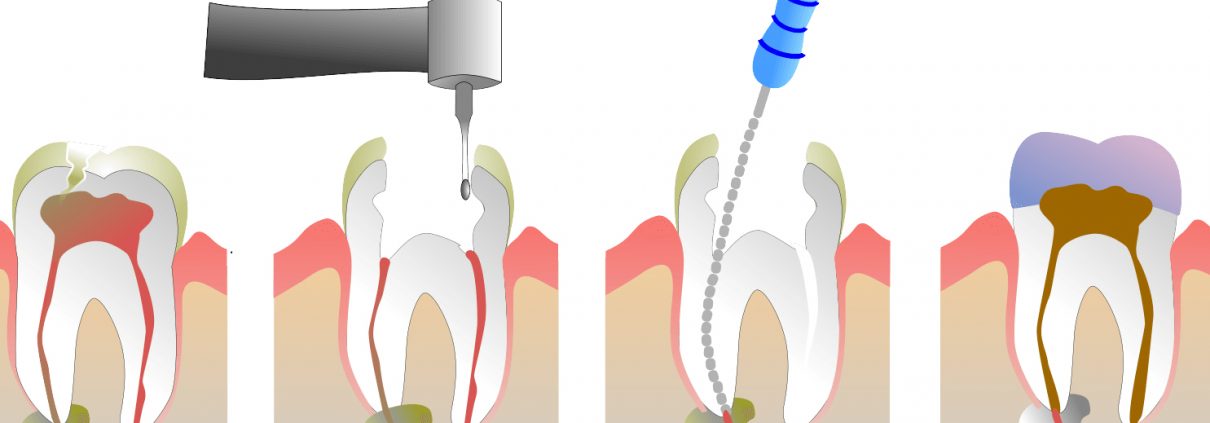
Inside every tooth is the pulp, a soft tissue containing nerves and blood vessels. When deep decay, a crack or an injury lets bacteria reach the pulp, it can become inflamed or infected. During a root canal, the dentist removes the damaged pulp, cleans and shapes the canals inside the root, and seals them. The tooth is then protected with a filling or, more often, a crown.
Signs You May Need Root Canal Treatment
- Severe or throbbing toothache, especially when chewing
- Sensitivity to hot or cold that lingers after the food or drink is gone
- A tooth that has darkened in colour
- Swelling or tenderness in the gum near a tooth
- A small bump on the gum that may drain (a sign of an abscess)
Some infected teeth cause no symptoms at all and are found on routine X-rays. This is one reason regular check-ups matter.
What Happens During Root Canal Treatment
- Diagnosis: we examine the tooth, test it and take X-rays to confirm the cause of the problem.
- Freezing: local anaesthetic numbs the tooth and surrounding area.
- Cleaning: the infected or inflamed pulp is removed and the canals are cleaned and disinfected.
- Sealing: the canals are filled and sealed to prevent bacteria from re-entering.
- Restoring: a filling or crown protects the tooth so it can function normally.
Treatment may take one or two visits, depending on the tooth and the infection. Complex cases may be referred to an endodontist (a root canal specialist).
After Your Root Canal
- The tooth may feel tender for a few days. Over-the-counter pain relief usually helps.
- Avoid chewing hard foods on the tooth until the final crown or filling is placed.
- Brush and floss normally, and keep your follow-up appointment.
- Contact us if swelling increases or pain gets worse instead of better.
Root Canal or Extraction?
Keeping your natural tooth is usually the better long-term option when it can be saved. It keeps your bite stable and avoids the cost and time of replacing a missing tooth. If a tooth cannot be saved, we will discuss extraction and replacement options such as dental implants.
Before Your Root Canal Appointment
- Eat a normal meal beforehand, since the area will stay numb for a few hours afterwards.
- Take any prescribed antibiotics or pain relief exactly as directed.
- Tell us about your medical history and medications, and let us know if you feel anxious so we can plan extra time or discuss sedation.
Front Teeth, Back Teeth and Retreatment
- Front teeth usually have one canal, and the treatment is often shorter.
- Molars can have three or four curved canals, so they may take longer and usually need a crown afterwards.
- Retreatment may be needed if a previously treated tooth becomes painful or infected again. We will check whether the tooth can be treated again or whether a specialist is the better option.
Cost and Insurance
The cost of root canal therapy depends mainly on which tooth is treated, since molars have more canals than front teeth. The final restoration, usually a crown on a back tooth, is a separate cost.
Most dental plans cover part of root canal treatment, but coverage varies. Ask us for a written estimate you can check with your insurer before treatment. Saving a tooth is often less expensive over time than removing it and replacing it with an implant or bridge.
Your Dentists
Root canal treatment at Sapperton Dental is planned and carried out by our dentists, Dr. Sandeep Sachdeva and Dr. Sarika Sachdeva. If your tooth has complex anatomy, we may refer you to an endodontist and coordinate your care.
Frequently Asked Questions
Is a root canal painful?
With modern freezing, most patients find a root canal feels similar to having a filling. The procedure is meant to relieve the pain caused by the infection.
How long does a root canal take?
A typical appointment takes about one to two hours. Some teeth need a second visit.
Do I need a crown after a root canal?
Back teeth usually need a crown because they take heavy chewing forces and can become brittle after treatment. Front teeth can sometimes be restored with a filling.
Can I wait if the pain goes away?
Pain sometimes fades when the nerve dies, but the infection remains and can spread. Have the tooth checked even if it stops hurting.
I’m nervous about dental treatment. What are my options?
Let us know when you book. We can take extra time, explain each step, and discuss sedation dentistry if appropriate.
How long does a tooth last after a root canal?
A root-canal-treated tooth that is properly restored and kept clean can last for many years, often for life. A good seal and a crown on back teeth are the key factors.
Can I drive or go to work after a root canal?
Yes, if you only had local freezing. Most people return to normal activities the same day. If you had sedation, you will need someone to drive you home.
What if a root canal does not solve the problem?
Most root canals heal well. If symptoms return, the tooth can often be retreated, or a specialist may recommend a small surgical procedure at the root tip. Removal is the last option. Call us if pain or swelling comes back.
Are dental X-rays safe?
Dental X-rays use a very low dose of radiation, and we only take them when they help with diagnosis or treatment. A root canal usually needs a few X-rays to check the canals. Learn more in our article on dental X-rays.
Book an Appointment
If you have tooth pain or think you may need a root canal, contact Sapperton Dental at 301 East Columbia Street #105, New Westminster. Call 604-544-0894 or request an appointment. For urgent pain or swelling, see our emergency dental care page.